



Evolutionary to Revolutionary: the Corvette’s Last Three Generations
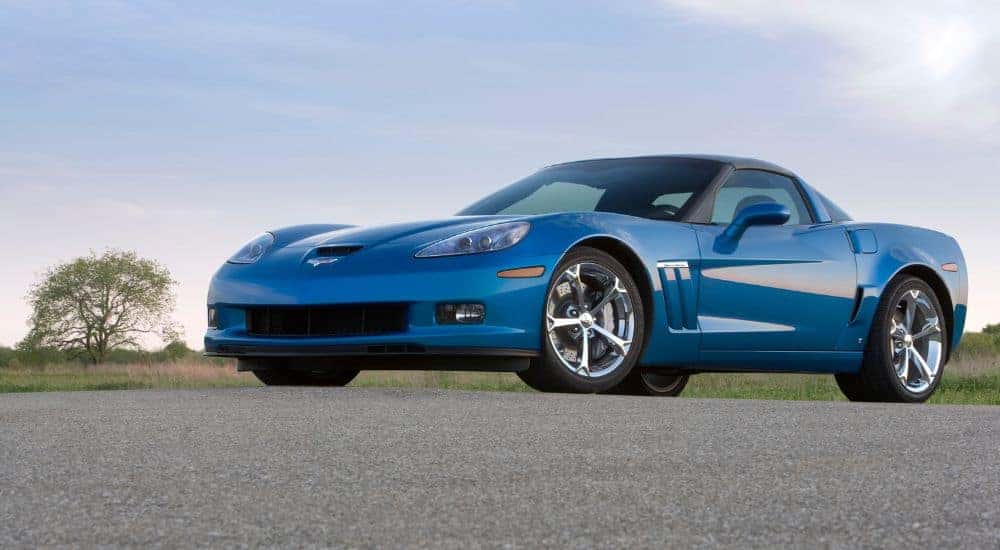
To say that the team here at Parks Chevrolet Spartanburg are Corvette enthusiasts would be a bit of an understatement; we eat, sleep, and breathe the bowtie brand’s flagship performance car. That’s why we want to go over the current generation C8 Corvette and how it differs from the C7 and the C6 Corvettes that you may find here at your local used Chevy dealer. From the evolutionary change from the C6 to the C7 to the truly revolutionary change from the C7 to the C8, every generation of the Corvette has something special to offer consumers, so allow us to walk you through the changes made to each generation using the C6 Corvette as a starting point.
The C6 Corvette
The C6 Corvette generation ran from 2005 until 2013. It came with an LS2 6.0L V8 producing 400 hp and 400 lb-ft of torque. This was later replaced by the 6.2L LS3 in 2008, which makes 430 hp and 424 lb-ft of torque. The high-performance Corvette Z06 that was added to the lineup in 2006 comes with a monstrous 7.0L LS7 V8 that puts out a whopping 505 hp and 470 lb-ft of torque, huge numbers for a naturally aspirated V8 even by today’s standards. Then, in 2009, the Corvette ZR1 was released with the supercharged 6.2L LS9 V8 engine under the hood, which generates a massive 638 hp and 604 lb-ft of torque. The 2009 Corvette ZR1 was also the first production Corvette to break the 200 mph barrier.
The philosophy behind the C6 was to take any shortcomings the previous C5 Corvette had and button them up nicely to create a perfectly balanced sports car. Speaking of perfectly balanced, the C6 Corvette has a perfect 50:50 weight distribution and weighs around 3,200 lbs, depending on the trim. Overall, the C6 ‘Vette is regarded as one of the best-balanced Corvette generations, but it had yet to really hit the limit of what the front engine layout was capable of. That’s where the C7 comes in…
The C7 Corvette
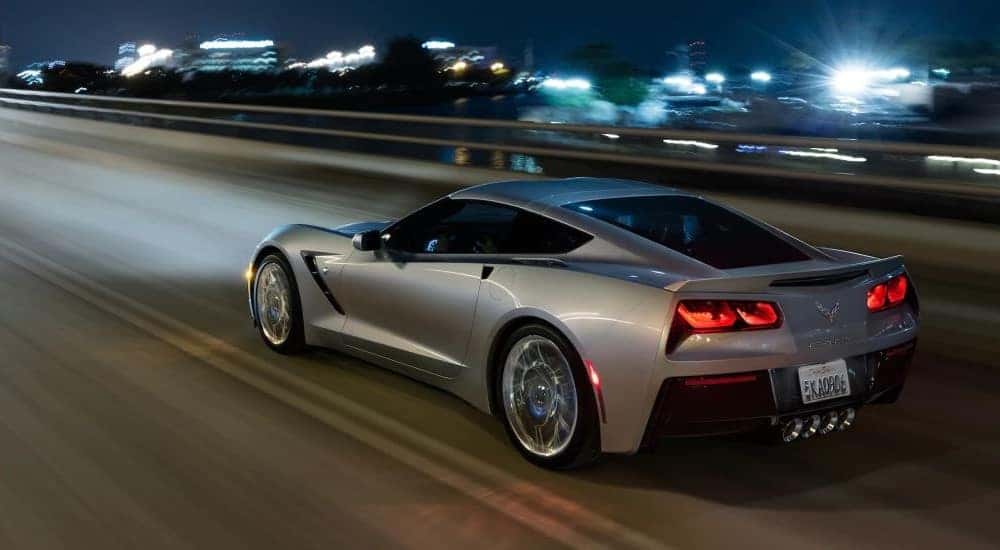
The C7 Corvette ran from 2014 until 2019. It did away with the somewhat “friendly” face that the C6 generation had in favor of aggressive and angular lines. Dubbed the “Stingray,” its appearance was meant to pay homage to the 1963 Corvette Sting Ray with its wild lines and unique styling.
From the outside, it would be easy to assume that the C7 Corvette was simply a C6 with new bodywork, but you would be greatly mistaken to think so. The C7 was redesigned from the ground up with a new frame and powertrain. The new aluminum frame and cradles were designed to improve lightness and rigidity; the frame was also intentionally designed to shift the weight slightly rearward in order to maintain the 50:50 weight balance with the redesign.
The heart of the C7 is the 6.2L LT1 V8 that pumps out 450 hp and 450 lb-ft of torque. In 2015, the Z06 returned to the Corvette lineup, this time boasting a supercharged 6.2L LT4 engine boasting 650 hp and 650 lb-ft of torque, making it the most powerful car Chevrolet produced––although this record would only last until 2019 (but more on that later). Because of advancements in metallurgy and chassis design, the C7 generation was the first time the Z06 was available as a convertible as well as a coupe. Up until that point, it was impossible to produce a convertible that would hold up to the Z06’s performance demands.
In 2019, the ultimate front-engine Corvette was born. The C7 ZR1 produces an insane 755 hp and 715 lb-ft of torque with its supercharged 6.2L LT5 V8 engine. A massive wing is attached directly to the chassis to provide the downforce needed for the ZR1 to perform as intended. With the standard low wing, the ZR1 has an official top speed of 212 mph, while the optional high wing loses four mph of top speed in exchange for 950 lbs of downforce.
The C7 Corvette ZR1 was a true feat of engineering, but with it came a harsh realization: the only way that the Corvette could advance further was to do away with the front engine layout that the Corvette had been known for since its inception. Where the C7 was a clear evolution of the C6 Corvette, it was time for Chevy to do something revolutionary if it wanted the Corvette to continue to grow. Cue the C8.
The C8 Corvette
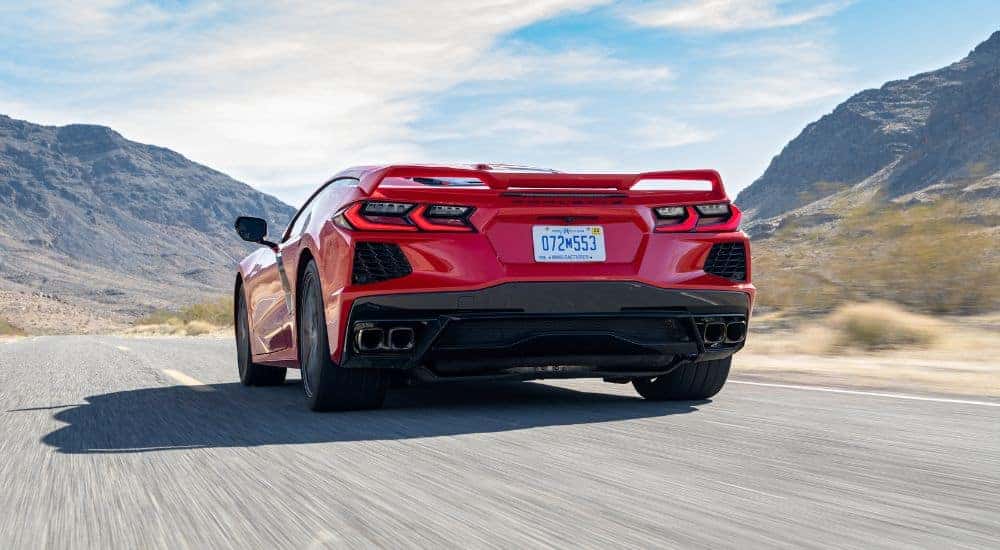
The C8 Corvette launched in 2020 and is still in production. Once again, it was a ground-up redesign, but this time, it was the revolutionary switch from a front-engine layout to a mid-engine layout that defined the new generation. To say that the C8 made waves when it was revealed would be putting it lightly.
The idea of a mid-engine Corvette was mind-blowing for enthusiasts––the stuff of “what if” discussions and hopeful digital renderings had come to life. Even aside from the shock of there being a mid-engine Corvette, a mid-engine sports car with a V8 engine for under six figures was unheard of until then. The heart of the C8 is the 6.2L LT2 engine, which produces up to 495 hp and 470 lb-ft of torque, making it the most powerful entry-level Corvette to date. When equipped with the Z51 performance package, the 2020 Stingray was the quickest Corvette ever produced, with a zero to 60 mph time of a blistering 2.8 seconds.
The C8 is much more practical than most mid-engine vehicles. Its body reinforcements run through the center of the chassis around the transmission tunnel instead of along the sides of the cabin, eliminating the extremely wide door sills associated with most mid-engine cars. This makes getting in and out of the C8 just as easy as any other sports car. The mid-engine layout also brings new levels of stability to the Corvette, allowing for insane levels of performance. Still, it wasn’t until the C8 Corvette Z06 arrived that Chevy fully unlocked the new platform’s potential.
In 2023, the Z06 debuted with a unique 5.5L LT6 engine that delivers an astounding 670 hp. This made it the highest horsepower naturally aspirated V8 ever to be offered in a production car. The flat plane crank layout allows for an absolutely insane 8,600 RPM redline, which makes it roar with a howl that is rarely heard outside of a racetrack. It is truly a marvel of American engineering. The Z06 is the ultimate Corvette for the track, but what would the ultimate Corvette for the street look like? Probably something like the C8 Corvette E-Ray.
New for the 2024 model year, the E-Ray has the LT2 V8 engine out of the C8 Stingray, the widebody fender arches off the Z06, and an electric motor to power the front wheels. This not only makes the C8 E-Ray the first hybrid Corvette ever, but also the first all-wheel drive Corvette ever. The use of electric motors to power the front wheels rather than powering them off of the engine makes it so that there is no need to run a drive shaft to the front of the car. It also makes it so the all-wheel drive system doesn’t sap power from the rear wheels. Instead, it adds to it.
The front motor in the E-Ray provides an additional 160 hp on top of the 495 hp from the LT2 V8, making for an all-wheel drive mid-engine car that puts out 655 hp. That level of power being sent to all four wheels makes for a lightning-fast zero to 60 mph time of just 2.5 seconds while offering all-weather performance. Whether you want the ultimate Corvette for the street or for the track, the C8 generation has you covered.
Beyond Revolutionary
The Corvette is far from showing us all that it can do, and our team at Parks Chevrolet Spartanburg is more excited than ever to see what the bowtie brand has in store for its flagship sports car; we are Corvette enthusiasts, after all! However, just because this dream car keeps getting faster and more powerful doesn’t mean an older model is no longer a fantastic ride. That’s why we’re happy to help you find the used C6, C7, or C8 Corvette of your dreams. When you’re ready to cruise in style, just know that Parks Chevrolet Spartanburg has you covered!
0 comment(s) so far on Evolutionary to Revolutionary: the Corvette’s Last Three Generations